
It only took a few carefully chosen words.

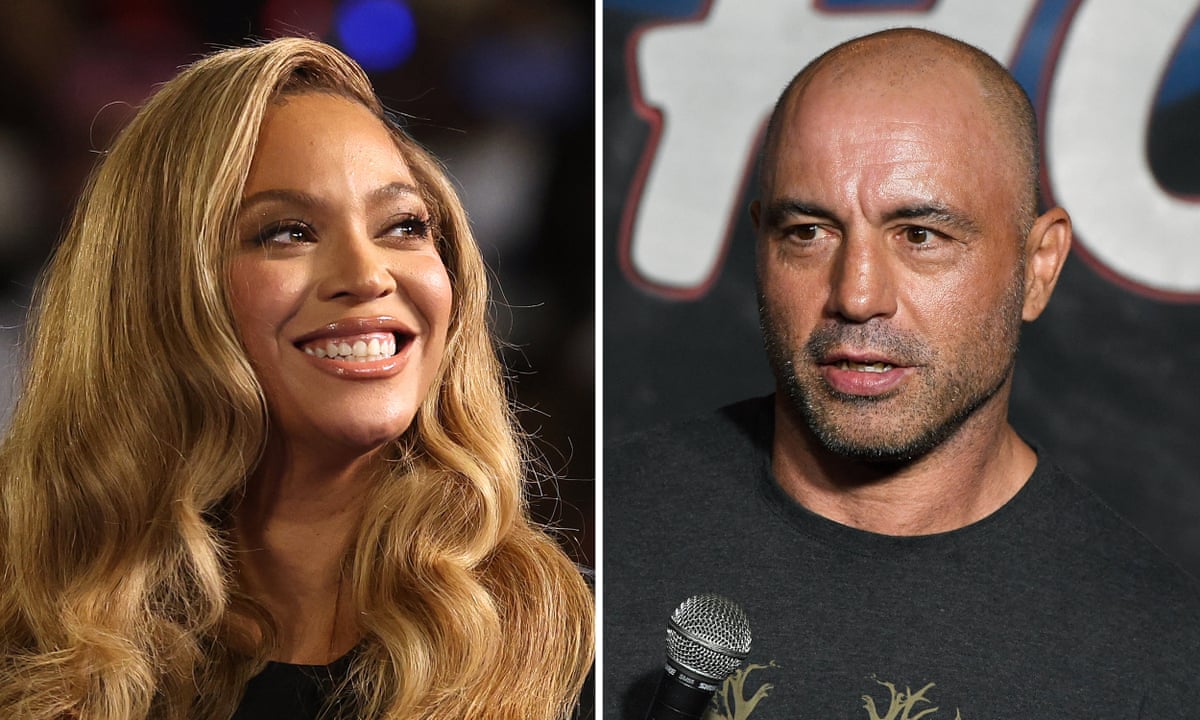
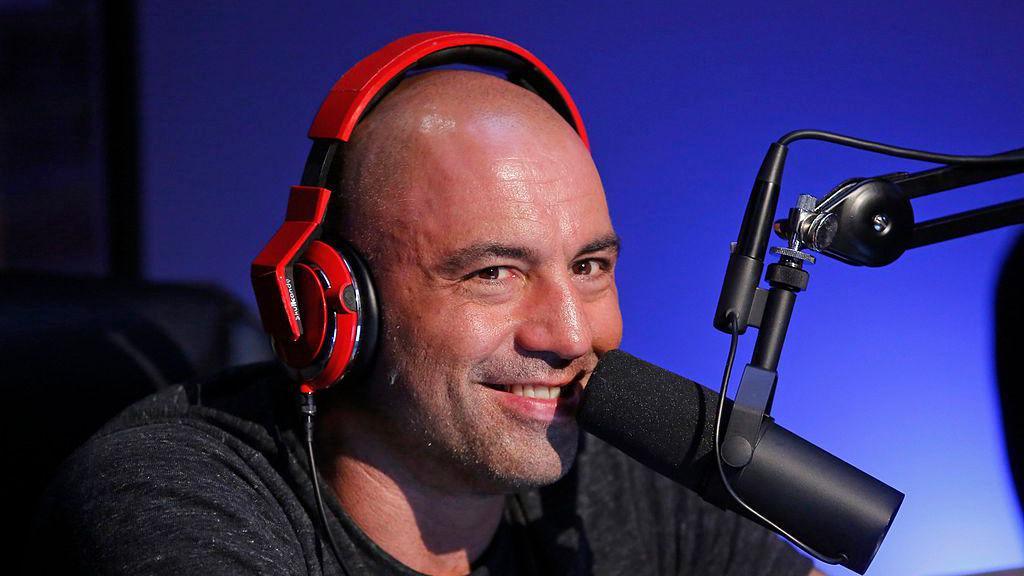
During a recent episode of The Joe Rogan Experience, Joe Rogan leaned back in his chair and made a remark that, on the surface, sounded almost casual.
He didn’t raise his voice.
He didn’t accuse.
He didn’t present evidence.
Instead, he alluded to something far more powerful: the idea of “rituals” behind the stage lights of Beyoncé.
He moved on quickly.
But the internet didn’t.
Within hours, clips were circulating.
Comments multiplied.
Threads expanded into digital labyrinths of speculation.
The word “ritual” began trending alongside Beyoncé’s name, and what had once been dismissed as fringe conspiracy chatter was suddenly being reexamined under a brighter, more curious light.
Not because Rogan provided proof — he didn’t.
But because he said just enough to make people look twice.
And when people look twice at Beyoncé, they don’t just see choreography.
They see symbols.
For years, Beyoncé’s performances have been praised as visionary, layered, and culturally rich.
Her visual albums, especially projects like Lemonade, were celebrated for weaving together history, ancestry, empowerment, and mythology.
Critics called it art.
Scholars called it commentary.
Fans called it genius.
But now, some viewers are asking a different question: what if the repeтιтion of certain imagery isn’t just aesthetic?
Social media users have begun dissecting old performances frame by frame.
Hand gestures.
Costuming.
Lighting patterns.
Stage formations.
The pyramid silhouettes.
The circle motifs.
The all-seeing eye references that conspiracy forums have obsessed over for more than a decade.
Individually, they can be explained away as artistic choices.
Collectively, to some, they begin to feel intentional.
Is it symbolism? Of course it is — all art is symbolic.
But symbolic of what?
Rogan never specified.
That’s what makes it linger.
He didn’t accuse Beyoncé of anything criminal.
He didn’t claim insider knowledge.
Instead, he questioned the broader culture of power in entertainment — how certain figures seem untouchable, how narratives are carefully managed, how dissenting voices often fade quickly.
In that context, mentioning “rituals” wasn’t necessarily about candles and cloaks.
It may have been about influence, hierarchy, initiation — the unspoken structures that govern elite spaces.
Still, the ambiguity left room for something darker.
Because Beyoncé is not just an artist.
She is an insтιтution.
Married to Jay-Z, a mogul whose business reach stretches far beyond music, she occupies a rare tier of cultural dominance.
They don’t just release albums; they shift markets.
They don’t just attend events; they define them.
When they speak, industries listen.
When they remain silent, speculation grows.
And silence has been notable.
Neither Beyoncé nor her team responded to the renewed chatter.
They rarely do.
Her public image has long been one of strategic mystique — controlled interviews, тιԍнтly managed appearances, carefully curated messaging.
In an era where celebrities overshare, she withholds.
That restraint has often been interpreted as strength.
Now, some interpret it as distance.
The timing adds another layer.
The entertainment industry has recently faced increased scrutiny over power dynamics, secretive networks, and gatekeeping systems.
High-profile investigations into influential figures have shifted public perception.
The once unshakable aura surrounding celebrity culture feels thinner than it did a decade ago.
In that climate, even a vague suggestion of hidden “rituals” resonates more loudly than it might have before.
But here’s the uncomfortable truth: symbolism in performance art is not new.
From Madonna’s religious imagery to Lady Gaga’s avant-garde theatrics, pop culture has long flirted with the provocative.
Beyoncé herself has drawn heavily from African spiritual traditions, Black southern iconography, and historical references.
What some label occult, others identify as cultural homage.
So why does the suspicion persist?
Part of it may stem from scale.
Beyoncé’s productions are not concerts — they are spectacles.
Precision-timed lighting.
Military-grade choreography.
Hundreds of synchronized performers moving as one.
When something operates at that level of perfection, it can feel less organic, more engineered.
And humans have always been uneasy around things that appear too controlled.
Then there are the testimonials — vague, secondhand stories from anonymous “industry insiders” who claim there are layers to fame the public will never see.
None have provided verifiable evidence.
None have stepped forward on record.
Yet their whispers circulate endlessly, feeding an ecosystem of doubt.
Critics argue that this entire narrative is a recycled conspiracy theory dressed in modern packaging.
They point out that successful Black artists, particularly powerful Black women, have historically been subjected to disproportionate suspicion.
That accusations of secret societies and dark allegiances often mask discomfort with influence.
They may be right.
But curiosity doesn’t disappear simply because it is criticized.
What makes Rogan’s comment particularly combustible is his audience.
His platform reaches millions, spanning political, cultural, and ideological divides.
When he raises an eyebrow at something, even subtly, it legitimizes the act of questioning.
Not confirming — just questioning.
And questions are powerful.
Why do certain visual motifs appear consistently across tours separated by years? Why do some collaborators describe Beyoncé’s rehearsal process as “almost ceremonial” in its intensity? Why does the language surrounding elite entertainment spaces often sound coded, layered, insider-driven?
None of these questions prove wrongdoing.
Yet they create atmosphere.
Atmosphere is everything.
Beyoncé’s defenders insist that what critics interpret as ritualistic is simply discipline.
That what looks secretive is merely privacy.
That repeтιтion of imagery is branding.
They argue that the real story here isn’t hidden cabals — it’s the internet’s appeтιтe for mythmaking.
But mythmaking has always followed power.
The more untouchable a figure appears, the more the public searches for hidden cracks.
Beyoncé has mastered visibility and invisibility simultaneously.
She dominates headlines without granting access.
She shapes culture without constant commentary.
That paradox fuels fascination.
It’s worth noting that no credible evidence has surfaced linking her to any clandestine organization.
No documents.
No whistleblowers with verifiable claims.
Just interpretation layered upon interpretation.
Still, interpretation can reshape narratives.
Since Rogan’s remark, engagement around Beyoncé-related conspiracy content has surged.
Old YouTube compilations have resurfaced.
TikTok analysts with millions of followers are dissecting halftime shows and tour visuals with forensic intensity.
Reddit threads stretch thousands of comments deep.
The conversation has shifted from admiration to analysis.
And perhaps that’s the real story.
In a world where celebrity once operated above scrutiny, the public now insists on decoding everything.
No gesture is accidental.
No symbol is neutral.
No silence is meaningless.
Whether fair or not, icons are no longer allowed to exist without interrogation.
Beyoncé has weathered storms before — infidelity rumors, industry feuds, political backlash.
Each time, she emerged stronger, often transforming controversy into creative fuel.
If history is any indicator, she won’t address this directly.
She doesn’t need to.
Because ambiguity works in her favor.
The more people speculate, the more they watch.
The more they rewatch, the more her imagery embeds itself deeper into cultural memory.
If there are “rituals,” perhaps they are not occult at all.
Perhaps the ritual is the spectacle itself — the gathering of thousands in synchronized awe, the surrender to rhythm, the shared belief in something larger than the individual.
That, too, can feel spiritual.
Joe Rogan opened a door with a sentence.
Whether there is anything behind it remains unproven.
But the act of opening it has changed the conversation.
It has reminded audiences that power, especially concentrated power, will always invite scrutiny.
And Beyoncé, luminous and distant beneath the stage lights, remains exactly where she has always been — at the center of attention, yet just beyond reach.
The question is no longer whether there are secrets.
The question is why we so desperately want there to be.