🦊 COASTLINE CATASTROPHE: Florida Beaches VANISH Overnight as Mᴀssive Sinkholes Rip Open and Swallow Sand Without Warning 🌊

🦊 GROUND GIVES WAY: Crumbling Limestone Beneath Florida Triggers Sudden Coastal Collapse, Leaving Residents in Shock 😱
Florida’s Beaches VANISH Overnight—Giant Sinkholes SWALLOW Coastline as Limestone CRUMBLES Below
Sun.
Sand.
Selfies.
And suddenly… a yawning crater where your beach towel used to be.
Welcome to Florida — the land of oranges, retirees, theme parks, and apparently, geological plot twists dramatic enough to deserve their own Netflix docuseries.
Reports of significant beach erosion and sinkhole activity along parts of Florida’s coastline have sent locals, tourists, and armchair geologists into a full-blown sandy spiral.
Did the beaches literally vanish overnight? Not exactly.
Did portions of shoreline collapse, slump, and dramatically reshape themselves thanks to Florida’s famously fragile limestone underbelly? Oh yes.
And it’s messy.
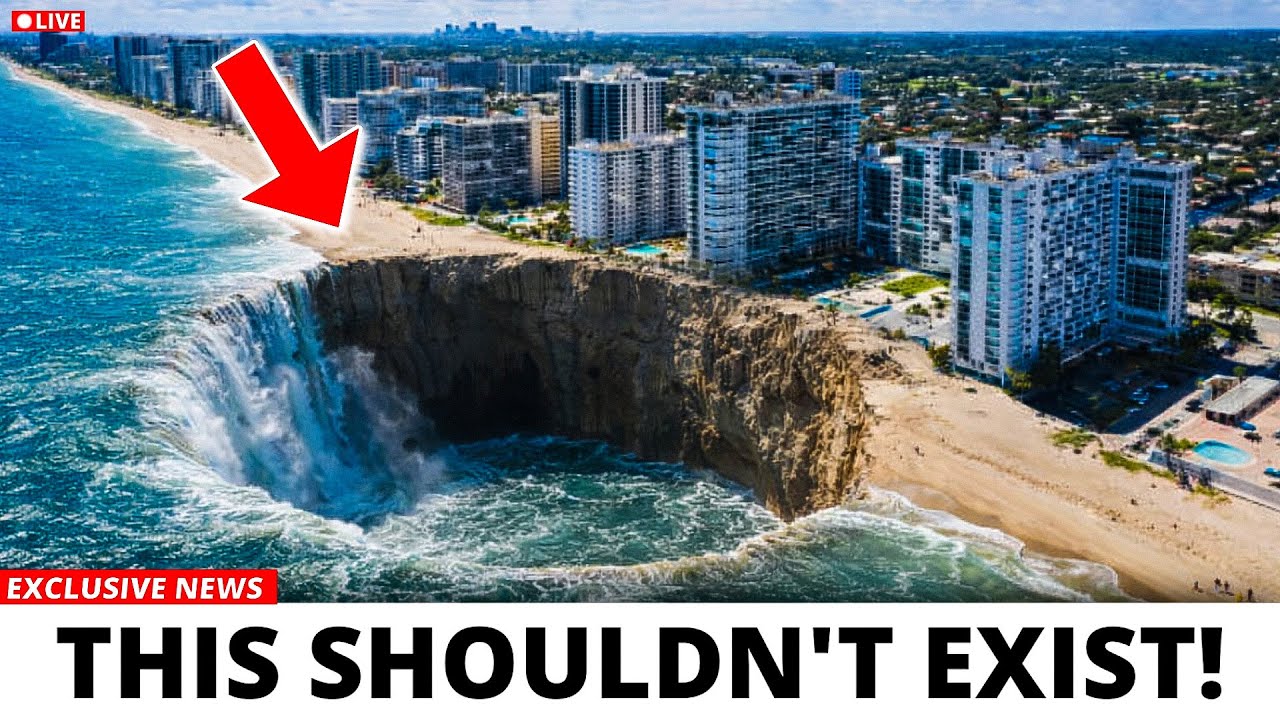
The Sunshine State’s Not-So-Sunny Surprise
Imagine this: you go to bed with ocean waves gently kissing the shore.
You wake up, shuffle down for your morning shell hunt… and the coastline looks like it lost a fight with gravity.
That’s the reality in areas where sinkhole activity and coastal erosion have intensified.
Florida sits on a foundation of porous limestone — the geological equivalent of a sponge cake soaked in groundwater.
Over time, water dissolves the rock, creating underground cavities.
Add heavy rain, rising sea levels, storm surge, or simple bad luck, and suddenly the roof caves in.
Boom.
Sinkhole.
And when that happens near a beach? The sand doesn’t politely wait its turn.
It slumps.
It slides.
It vanishes into the abyss like it forgot to pay rent.
Limestone: Florida’s Secret Frenemy
Let’s talk about limestone — the quiet villain of this sandy soap opera.
Florida’s entire peninsula is essentially a giant slab of carbonate rock.
It’s why the state has gorgeous freshwater springs, underwater cave systems, and… a long history of sinkholes.
When rainwater seeps into the ground, it becomes slightly acidic.
Over years (or centuries), it dissolves the limestone below, hollowing out chambers.
Eventually, the surface above those cavities loses support.
And when it collapses?

You get a hole big enough to make your beach umbrella rethink its life choices.
Dr.Marissa Kent, a coastal geologist, explains it in less dramatic terms:
“Florida’s geology makes it particularly vulnerable to sinkholes.
When coastal processes accelerate erosion, you can see sudden changes in shoreline shape.”
Translation: this isn’t aliens.
It’s chemistry.
Storms + Sea Level Rise = Trouble
Florida isn’t exactly known for calm weather.
Hurricanes, tropical storms, and king tides regularly batter the coastline.
When heavy storm surge slams into beaches, it strips away sand that normally acts as a protective buffer.
Without that layer, underlying sediments and limestone are exposed.
Add rising sea levels into the mix, and you’ve got a recipe for instability.
Coastal engineers have long warned that erosion isn’t just about losing a few inches of sand — it’s about reshaping entire shorelines.
But when reshaping happens fast?
Cue the dramatic headlines.
“It Was There Yesterday!”
Residents in affected areas have described noticeable overnight changes.
That’s because erosion doesn’t always happen gradually.
Sometimes it builds quietly, then gives way all at once.
A section of beach weakened by months of wave action and underground dissolution can suddenly slump during a storm or high tide.
To the naked eye, it feels instant.
To geology, it’s the final act of a very slow play.
Tourists vs.
The Earth’s Crust
Naturally, social media exploded.
Videos of partially collapsed dunes and exposed drop-offs circulated with captions like:
“THE BEACH IS DISAPPEARING.”
“FLORIDA IS SINKING.”
“PACK YOUR BAGS.”
While dramatic, the reality is more nuanced.
Florida isn’t about to slide into the Atlantic tomorrow.
But parts of its coastline are undeniably vulnerable.
And when tourism fuels the local economy, even the suggestion of instability causes panic.
Beachfront rental owners have already begun fielding questions like, “Is the sand safe?”
A sentence no one thought they’d need to ask.
Sinkholes: Florida’s Long-Standing Frenemy
Florida averages thousands of sinkhole reports each year.

Most are small.
Some are spectacular.
They appear in backyards.
Under roads.
Occasionally beneath homes.
Coastal sinkholes are less common but not unheard of — especially where groundwater systems intersect with marine processes.
The difference here? Visibility.
A sinkhole in your lawn is terrifying.
A sinkhole on a beach is viral.
The Insurance Industry Is Sweating
Let’s pause for a moment of silence for Florida’s insurance providers.
Between hurricanes, flooding, and sinkhole coverage claims, insurers in the state already walk a financial тιԍнтrope.
Large-scale erosion events raise complicated questions:
Is it storm damage?
Is it geological collapse?
Is it gradual deterioration?
The answer determines who pays.
And that’s where things get legally spicy.
Is This Climate Change’s Calling Card?
Experts caution against blaming any single erosion event solely on climate change.
However, rising sea levels and intensified storm systems undeniably contribute to coastal vulnerability.
Higher baseline water levels mean waves reach further inland.
That accelerates dune erosion and undermines structural stability.
In short: when the ocean creeps higher, everything built on the edge becomes riskier.
And Florida has built a lot on the edge.
Beach Nourishment: Sand by the Truckload
Florida isn’t pᴀssively watching its beaches vanish.
The state regularly engages in “beach nourishment” projects — essentially importing sand to rebuild eroded areas.
It’s like giving the coastline a cosmetic refill.
But here’s the twist: replenished sand doesn’t fix underlying limestone cavities.
It restores surface area but doesn’t stabilize deep geology.
If the foundation is compromised, adding sand is more bandage than cure.
The Viral Factor
In the age of smartphones, every collapsing dune becomes breaking news.
A 30-foot section of eroded beach looks apocalyptic in a тιԍнт camera angle.
Widen the lens, and you might see miles of intact coastline nearby.
Context matters — but context doesn’t trend.
Are Entire Beaches Disappearing?
No.
Florida still has hundreds of miles of sandy shoreline.
However, localized sections have experienced dramatic erosion or sinkhole activity.
These changes can alter access points, create steep drop-offs, or temporarily close areas for safety ᴀssessments.
Authorities monitor these zones to prevent accidents.
Because nothing ruins spring break like falling into a geological feature.
The Science of “Overnight”
When people say beaches vanished “overnight,” they usually mean:
A storm event caused rapid erosion.
A pre-existing cavity collapsed suddenly.
Tidal shifts exposed previously hidden instability.
Geology operates on long timelines… until it doesn’t.
Think of it as decades of quiet prep work followed by one dramatic curtain drop.
Should You Cancel Your Vacation?
Not necessarily.
Florida’s tourism infrastructure is experienced in handling coastal change.
Many beaches remain stable and open.
But travelers should always:
Check local advisories.
Respect posted safety signs.
Avoid unstable-looking drop-offs.
And maybe don’t set up your beach chair directly beside a suspiciously soft patch of sand.
Just saying.
The Bigger Picture
Florida’s coastline has always been dynamic.
Barrier islands shift.
Sand migrates.
Tides reshape the shore.
What feels catastrophic in a single moment is often part of a longer pattern of change.
That doesn’t mean concerns are exaggerated — erosion is real, and sinkholes are real.
But it does mean we’re witnessing a complex interplay of:
Geology
Weather
Human development
Sea level dynamics
Not the sudden disappearance of the Sunshine State.
The Psychological Shock
Beaches symbolize permanence in our minds.
They’re vacation backdrops.
Memory-makers.
Instagram gold.
When they shift dramatically, it rattles us.
We expect mountains to crumble.
We don’t expect our favorite stretch of sand to develop a sinkhole personality.
But coastlines are living systems.
And living systems change.
So… Is Florida Sinking?
Not wholesale.
But certain areas are subsiding, eroding, or reshaping — as they have for centuries.
What’s different now is density of development and real-time documentation.
When millions live along vulnerable shores, every shift feels amplified.
Final Verdict: Drama Meets Reality
Did Florida’s beaches “vanish overnight”?
Not entirely.
Did significant erosion and sinkhole activity dramatically alter portions of coastline?
Yes.
Is limestone quietly dissolving beneath our feet?
Also yes.
The Sunshine State remains sunny.
The beaches remain iconic.
But beneath the sand lies a reminder that nature doesn’t sign long-term stability contracts.
Florida’s coastline is beautiful, dynamic, and occasionally dramatic.
And sometimes, it decides to remind us who’s really in charge — one collapsing cavity at a time.
✓ admin
🦊 GROUND GIVES WAY: Crumbling Limestone Beneath Florida Triggers Sudden Coastal Collapse, Leaving Residents in Shock 😱 Florida’s Beaches VANISH Overnight—Giant Sinkholes SWALLOW Coastline as Limestone CRUMBLES…