
There are goodbyes spoken through speeches, prayers, flowers, and silence, and then there are goodbyes that seem possible only through music.
In this imagined memorial story, Riley Keough, granddaughter of Elvis Presley, is entrusted with an extraordinary responsibility: to stand before those who loved Dolly Parton and sing “I Will Always Love You” as a final musical farewell.
Framed not as a documented account of Dolly’s actual final instructions but as a symbolic tribute inspired by her extraordinary legacy, the scene carries the emotional weight of two great Tennessee musical histories meeting beneath the same lights.
Riley approaches the microphone without spectacle, surrounded by white flowers and the quiet faces of people who understand that some moments cannot be improved by elaborate production.
Sometimes one voice and one familiar melody are enough.
For Riley Keough, the imagined occasion would have meaning far beyond the performance itself.
She carries the Presley name, a name permanently connected with the history of American popular music, yet she also belongs to a generation that has inherited both the glory and the sorrow of that history.
As the granddaughter of Elvis Presley and daughter of Lisa Marie Presley, Riley understands something that audiences often forget about famous families: public legends are also private relatives.
PH๏τographs seen by millions can represent fathers, mothers, grandparents, and memories that belong to only a handful of people.
That understanding would make Riley an especially poignant figure to stand before Dolly’s memorial image and offer a song about remembering someone after separation.
The choice of “I Will Always Love You” would carry almost unbearable symbolism.
Dolly wrote the song long before it became a worldwide standard, and its enduring power comes from its emotional restraint.
It is not a song built on anger or accusation. Instead, it accepts departure while protecting graтιтude.
That distinction becomes increasingly meaningful with age. Older listeners know that the most important goodbyes are rarely simple.
A person can leave and still remain present in pH๏τographs, familiar rooms, family traditions, and songs heard unexpectedly on the radio.

In the imagined performance, the first notes would arrive quietly.
A piano might begin alone while Riley Keough remains almost motionless beneath a single warm spotlight.
Behind her stands a portrait of Dolly Parton, not as decoration but as the emotional center of the room.
Riley does not attempt to imitate Dolly’s unmistakable country voice, nor does she try to reproduce the towering interpretations that later made the song famous around the world.
Instead, she treats it as though she were reading a private letter aloud.
That restraint would make the performance feel more intimate. Each pause would matter.
Each breath would seem to carry another memory.
The audience would not simply be listening to a familiar composition; they would be considering everything Dolly Parton represented across decades of American life.
She was a songwriter capable of transforming ordinary experiences into enduring music, a performer whose humor and warmth made enormous stages feel surprisingly personal, and an artist whose songs accompanied listeners through childhood, marriage, parenthood, loss, and old age.
For those who remember Elvis Presley, Riley’s presence would add another layer to the scene.
Elvis and Dolly emerged from Tennessee backgrounds and eventually became international symbols, although they followed very different artistic paths.
Elvis changed the sound and image of popular music, while Dolly built an extraordinary career through country storytelling and songwriting.
Their histories famously intersected around “I Will Always Love You,” a song Elvis considered recording but ultimately never released after Dolly declined the proposed publishing arrangement.
Decades later, the imagined sight of Elvis Presley’s granddaughter singing that very composition in Dolly’s honor would possess a remarkable sense of historical symmetry.
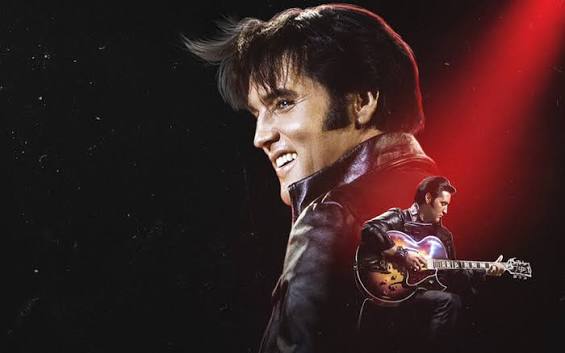
As Riley reaches the later pᴀssages, one can imagine the accompaniment becoming even softer.
Rather than building toward spectacle, the musicians withdraw, leaving more space around her voice. The room becomes still.
Perhaps Riley looks briefly toward Dolly’s portrait before continuing, and that small gesture changes the atmosphere entirely.
Suddenly the performance feels less like entertainment and more like a conversation with someone who is no longer standing in the room.
For older listeners, that feeling would be immediately recognizable.
By a certain age, nearly everyone carries an invisible audience of people they wish they could speak to again.
Parents, spouses, siblings, old friends, and performers who once seemed permanently present eventually become memories.
Music has the mysterious ability to make those absences feel temporarily smaller.
One melody can reopen a room that has been closed for decades.
When Riley Keough reaches the final moments of “I Will Always Love You,” there is no need for theatrical drama.
The song already contains enough.
She delivers the final phrase, lowers the microphone, and remains beneath the light as the piano fades.